Welcome
The Icon Bar is the longest running RISC OS portal. The sensibilities that Acorn instilled in us still influence our interests and writing.
Buy swag |
Got news?
Let us know! |
|
Posted by Andrew Poole on 08:00, 24/12/2022
| Acorn, Demo scene, Emulation, Hardware, Programming, Retro, RISC OS, Video
 Over the last few years, ABug have hosted a fascinating series of talks over Zoom on a wide range of retro Acorn and BBC Micro topics. We posted about a few of them last Christmas. Just in time for this Christmas, ABug have been busy over the last few weeks posting some more of the talks to their YouTube channel, just in time for escaping from another load of Christmas film repeats on TV. This time around, there's talks on a variety of topics, including building RISC OS 3.71 from its original source code, software presevation and rescuing data from old BBC Micro discs, stories from BBC Micro developers and more. The full list of videos is on the ABug YouTube page (with more still to come in the coming days!), but here's a few of our favourites to get you started: |
Posted by Andrew Poole on 11:33, 10/9/2021
| Emulation, Games, Microsoft, Retro, RISC OS, Software, Windows
Archimedes emulator Arculator has been updated to version 2.1 with some very nice new features. The emulator can now emulate an A4 laptop or the A500 prototype and can also emulate more podules, including the Aleph One 386 and 486 podule, meaning you can now run DOS and Windows in the emulator. Other podules now supported include Acorn ROM podules, MIDI podules, Oak SCSI interfaces and Computer Concepts' ColourCard. Support for disc images in the .hfe format is also now included.   Head over to the Arculator website to download the new version. |
Posted by Andrew Poole on 09:00, 1/1/2021
| Games, Retro, Acorn
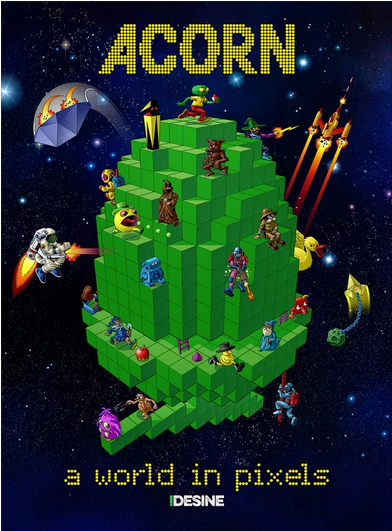 Acorn - A World in Pixels Acorn - A World in Pixels, by idesine publishing, is a new 476 page book about the best the BBC Micro had to offer in games. From Airlift to Zalaga, a huge number of the well known BBC Micro-era games are included with wonderfully designed full-colour pages for each and interviews with some of the programmers behind the games and also the people behind the computers themselves. The book, published on 27 November, 2020, is beautifully presented in hardback form with an Acorn green bookmark attached to the spine and contained within a hard slip cover. The book starts with a short overview of Acorn and the BBC Micro followed by overviews of some of the bigger publishers of the time including Acornsoft, Superior Software, Micro Power and the 4th Dimension before diving into the games themselves. Many games have a full page spread with a description of the game and screenshots and illustrations. Interspersed between the game pages are interviews with developers, publishers and other prominent names from the era. Towards the end of the book, there's a selection of interviews and information about the magazines of the time including Acorn User, The Micro User and Electron User as well as some interviews with some of the people who produced the sound and graphics to go with the games. 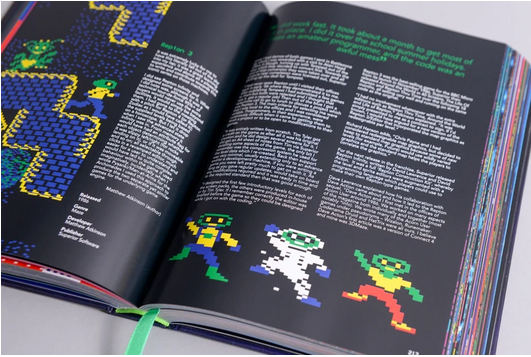 Finally, there's a quick look at some more recent activity in game development for the BBC Micro with interviews with some developers who have been working on games for the systems in recent years. If you played games on the BBC Micro or Electron, Acorn - A World in Pixels is bound to bring memories of the time flooding back. The book is available from the usual book stores and the publisher's website with an RRP of £29.99. Linksidesine: Acorn - A World in Pixels (Publisher's website) |
Posted by Andrew Poole on 09:00, 26/12/2020
| Acorn, Demo scene, Emulation, Hardware, Programming, Retro, RISC OS, Video
What better way to spend your free time this Christmas while we're not allowed to go anywhere than to sit back, relax and enjoy some interesting presentations on a variety of Acorn and RISC OS topics? Since 2014, ABug - the Acorn and BBC Micro User Group - have been holding regular events featuring talks on a wide range of topics relating to Acorn and RISC OS computers, both as in-person events and more recently as virtual events. We've selected a few of our favourites in this article, but the ABug website has a lot more talks available to choose from. |
Posted by Mark Stephens on 07:25, 15/5/2020
| Retro, Reviews
So far, 3 videos have been published on youtube to encourage people to use RISC OS.
Continue reading "RISC OS Direct Videos -3. Gaming and emulation"
| Comment in the forums |
Posted by Mark Stephens on 07:22, 8/5/2020
| Retro, Reviews
Video 2 picks up from the introductory video which showed up how to setup a Raspberry Pi with RISC OS and gave us a very brief overview about how to use it.
Continue reading "RISC OS Direct Videos -2. Setting up and User interface"
| Comment in the forums |
Posted by Mark Stephens on 07:58, 1/5/2020
| Retro, Reviews
This is the first in a series of free videos on YouTube, aimed at encouraging new users to try RISC OS. It is hosted by Tom Williamson (who we interviewed in 2016). Tom runs the wifi sheep youtube channel. |
Posted by Michael Drake on 21:25, 7/7/2015
| Acorn, Emulation, Games, Copyright, RISC OS, Software, Retro
Time for a round-up of recent games news. JASPP to release more classicsJon Abbott of the JASPP software preservation project has recently announced that they have acquired the rights to distribute games previously developed/published by Artex Software, Eterna, Minerva and Visions of the Impossible. These games include such classics as: Ballarena, Botkiller, Exodus, Poizone, Prime Solver & SunBurst. The games are being released through the JASPP forum, so keep an eye out for updates there. No mention was made of Artex Software's later games Ankh and TEK, or the never released for RISC OS Iron Dignity, with its impressive 3D rendering engine. The announcement does mention that JASPP are looking to update some of the titles by Artex Software and Visions of the Impossible to run natively on 32-bit systems. The first to get such treatment will be VOTI's SunBurst. Whether this news will lead to a 32-bit multitasking desktop WIMP conversion of Super Foul Egg, or Exodus running natively on the Panda Board is unknown at this time. Star Fighter 3000 released for freeThis happened a while back, but the full Star Fighter 3000 game has been released for free. This is the latest souped-up version, which features improved rendering distances, desktop play, and a host of other improvements. It runs on RISC OS machines from the latest dev-board hardware, right back to the old Archimedes systems it originally appeared on. To run it on an old Archimedes system at full frame rate, you'll need to make sure you have the nested WIMP installed, reduce the game's graphics settings and force it to run in fullscreen mode. New game: OverlordAnthony Vaughan Bartram of Ambiguous Contrasts Games has produced Overlord, a space shoot-em-up on available PlingStore. The latest version, 1.40, has just been released. RailPro-like game progressingIn other news, James Shaw has been keeping us informed of his progress on the development of a RailPro-like game. | |
Read article...
| Comment in the forums |
Read article...
| 18 comments in the forums | |
Read article...
| Comment in the forums |
Read article...
| 2 comments in the forums | |
Read article...
| 5 comments in the forums |
Read article...
| 12 comments in the forums | |
|


